For many adults, one of the first signs that the body feels different is not a dramatic injury. It is something ordinary. Standing up from a dining chair takes more effort. Getting out of a low sofa feels slower. Rising after a long dinner, a concert, or a card game suddenly requires a small reset.
That moment matters more than people think. It is tied to leg strength, balance, timing, trunk control, and confidence. It is also one of the reasons so many adults in Palm Beach, West Palm Beach, Boca Raton, Delray Beach, Jupiter, Wellington, and across South Florida start looking for exercise that feels practical, not punishing.
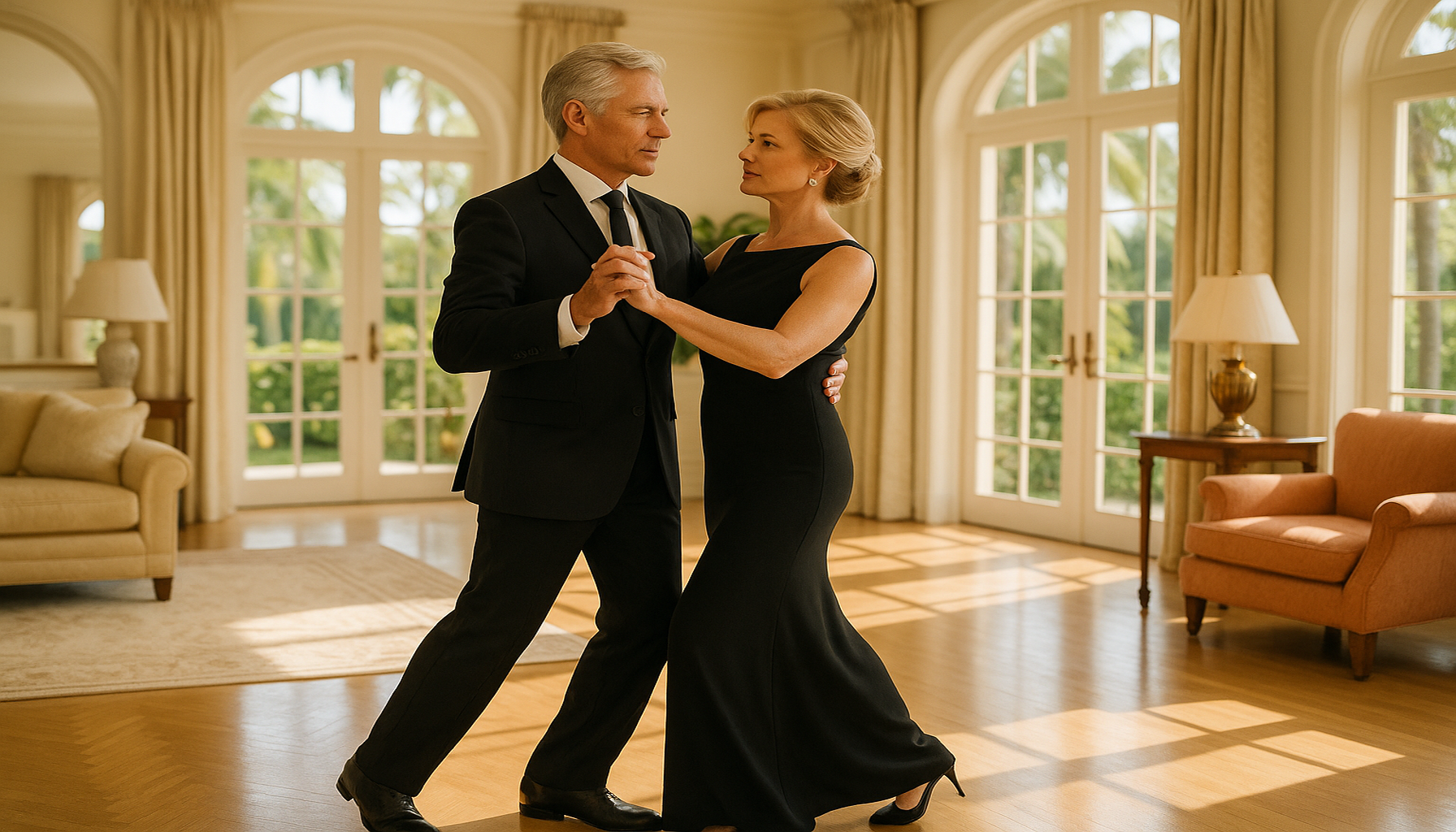
Ballroom dance can be a smart answer. Not because it is magic, and not because it replaces medical care, but because it trains many of the same ingredients everyday movement depends on. If your goal is to feel steadier, stronger, and less hesitant in your own body, dance is worth taking seriously.
Why standing up from a chair is such a useful real-life marker
Standing up well is a whole-body skill. You need enough leg drive to lift yourself, enough balance to control the shift forward, and enough coordination to keep the movement smooth instead of shaky. That is why clinicians pay attention to it.
The CDC’s STEADI fall-prevention toolkit uses the 30-second chair stand test to assess leg strength and endurance in older adults, and it uses the Timed Up and Go test to assess mobility. Timed Up and Go is simple but revealing: you stand up from a chair, walk three meters, turn, walk back, and sit down again. It is not a dance test, but it measures the same kinds of abilities people notice in daily life.
When those skills improve, people usually do not just feel better during exercise. They feel better leaving a restaurant table, getting out of the car, standing after watching a grandchild’s game, or moving through a crowded room without that little flash of uncertainty.
What ballroom dance actually trains
Good ballroom instruction is full of tiny physical tasks that add up. You shift weight from one foot to the other. You rise and lower with control. You rotate your torso without losing your center. You step backward and sideways. You stop, change direction, and start again. You do all of that while listening to rhythm and staying aware of another person or the space around you.
That combination matters. Plenty of workouts train strength. Plenty train cardio. Ballroom dance trains strength with timing, posture, reaction, and balance layered on top. That is much closer to how real life works. Everyday movement is rarely just muscle. It is muscle plus coordination plus confidence.
For adults who dislike crowded gyms or repetitive machines, that is a big reason private lessons feel so effective. You are not just working hard. You are practicing useful movement patterns in a way the brain actually wants to repeat.
What the research says
The evidence here is stronger than many people realize. A 2024 systematic review in PLoS One screened 885 papers and included 16 studies on dance interventions for middle-aged and older adults. The review found that most of the included studies showed improvements in physical function, balance, postural control, and quality of life. Just as important, adherence was high compared with options like physiotherapy, self-care, conventional therapy, and aerobic or resistance exercise.
That last point is a big deal. The best exercise is not only the one that works in theory. It is the one people actually keep doing.
A 2024 network meta-analysis in Frontiers in Public Health looked at 27 studies involving 1,219 older adults and found that ballroom dance, folk dance, and creative dance all significantly improved Timed Up and Go performance compared with control groups. Since Timed Up and Go includes standing up, walking, turning, and sitting back down, that finding is especially relevant for adults who care about everyday mobility instead of athletic performance.
Research does not prove that one lesson will make getting off your sofa effortless. But it does support the bigger idea: structured dance can improve the physical qualities that make ordinary movement feel easier and safer.
Why dance often works better than people expect
One reason ballroom dance helps is that it encourages repetition without boredom. People will avoid movements that feel intimidating or sterile. They are much more likely to repeat movements that feel elegant, musical, and social. That is part of why dance keeps showing up in healthy-aging research.
There is also a confidence factor. When adults start moving well to music, they tend to carry themselves differently outside the lesson too. Posture improves. Steps get cleaner. Turns feel less rushed. That body confidence matters when you stand up after a long meal or navigate a polished floor at a country club event in Palm Beach Gardens or Boca Raton.
Some clients first meet Gala Ballroom through our performances or our live violin entertainment, then realize they want some of that same grace and control in their own body. That is a smart instinct. Watching elegance is inspiring. Practicing it is even better.
If this is your goal, what should you focus on in lessons?
If you want dance to support easier standing and steadier movement, the goal is not flashy choreography. The goal is fundamentals. Strong posture. Controlled weight shifts. Clean walking patterns. Gentle rise and lowering. Better use of the feet. Calm turning. Simple partner timing. Those basics build the platform everything else sits on.
Private instruction is especially helpful here because the pace can be adjusted to your body. Some adults need slower transitions at first. Some need more balance support. Some are perfectly capable physically but have become cautious after a near-fall or a long stretch of inactivity. A lesson can meet each of those realities without embarrassment.
A quick reality check: dance is support, not a substitute for medical care
If standing up is painful, if you are dealing with significant dizziness, or if you have a recent injury, surgery, or neurological diagnosis, it is smart to check with your clinician first. Dance can be a wonderful complement, but it should fit the bigger picture of your health.
For many adults, though, the issue is not a major medical event. It is deconditioning, inconsistency, stiffness, or loss of confidence. Those are exactly the kinds of problems a well-structured movement practice can help.
The bigger win is not the chair
Yes, standing up from a chair more easily is a meaningful goal. But the bigger win is what it represents. More independence. Less hesitation. Better balance at social events. More comfort in your own home. More trust in your body.
If you are in Palm Beach, West Palm Beach, Boca Raton, Delray Beach, Jupiter, Wellington, or elsewhere in South Florida and you want movement that feels useful as well as enjoyable, Gala Ballroom can help. Call (561) 523-4133 or contact us here to book a private lesson and start building strength, balance, and confidence in a way that feels good to keep doing.