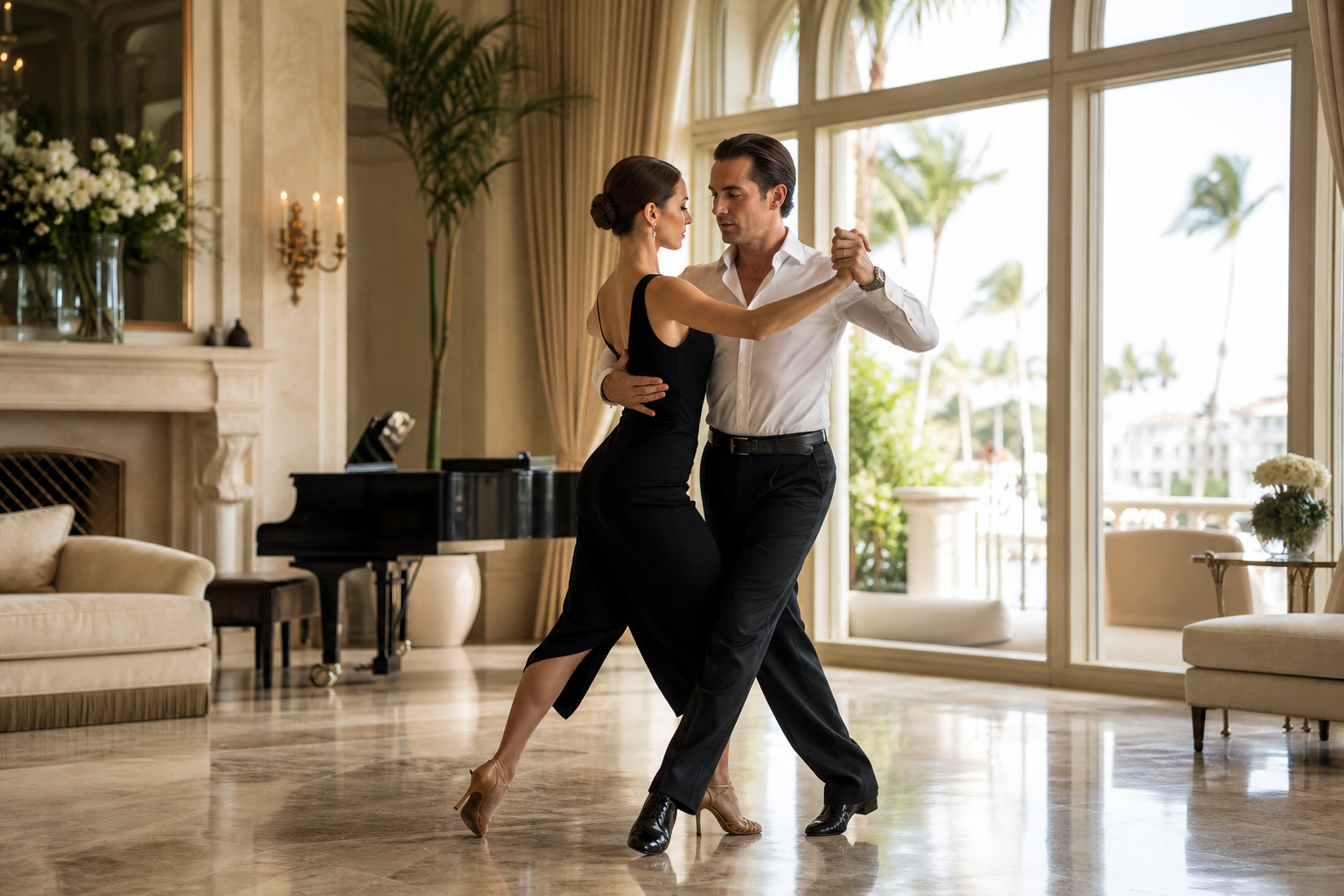
One of the biggest myths in dance is that progress only happens during the lesson itself. In reality, the people who improve fastest in Palm Beach, West Palm Beach, Boca Raton, and Delray Beach usually do something much simpler: they practice a little between lessons, and they practice the right way.
That does not mean turning your week into a second job. It does not mean drilling for an hour every night. And it definitely does not mean trying to memorize a full routine from memory while hoping it somehow cleans itself up. Good practice between private lessons is short, focused, and specific. The goal is not to do more. The goal is to lock in what your body just learned before it fades.
If you are taking private dance lessons at home, this is one of the biggest advantages you have over crowded studio classes. You are already learning in the same space where you can reinforce the material. That makes your progress smoother, faster, and less stressful.
Start with ten focused minutes, not an ambitious hour
Most adults set themselves back by making practice feel too big. They imagine they need a long uninterrupted block of time, then skip it completely when life gets busy. A better approach is ten to fifteen minutes with one clear purpose.
That short window is enough to review foot placement, timing, posture, frame, or one transition that felt shaky in the last lesson. It is also short enough that you can fit it into a real schedule. For busy professionals and couples in South Florida, that matters more than any idealized routine.
If you want a simple formula, use this: two minutes to reset your posture and connection, five minutes on one figure or pattern, then three to five minutes putting it back into music. That is a very effective practice session.
Practice the part that breaks, not only the part that feels good
Everyone wants to run the section that already feels polished. It is more fun, and it gives quick satisfaction. But the real growth usually comes from isolating the moment where things wobble. Maybe the turn starts late. Maybe the hold collapses. Maybe one partner knows the next step and the other hesitates. That is the section worth repeating.
When you find the weak spot, slow it down immediately. Walk it. Count it out loud. Strip the movement down until both partners understand what is happening. Then rebuild it. This is especially helpful for couples practicing at home because it keeps small confusion from becoming a weekly habit.
For event-focused students, this matters even more. If you are preparing for a first dance, anniversary surprise, or another special moment, clean transitions will make a bigger difference than adding more choreography. Our performance experiences often start with that same principle: strong moments come from clean basics, not unnecessary complexity.
Use music, but do not hide behind it
Music is important, but it can also mask mistakes. A lot of people only practice with the song on and then wonder why their timing still feels unstable. The better sequence is to first count without music, then add music after the pattern feels organized.
Try one pass counting slowly, one pass walking the pattern, and only then a few passes with music. If it falls apart with the song, go right back to counting. That is not failure. That is the fastest route to consistency.
This is one reason in-home instruction works so well for beginners in Palm Beach County. You are not competing with the noise of a studio floor or trying to hear yourself over multiple songs. You can actually listen, adjust, and feel the rhythm settle into your body.
Do not rehearse mistakes until they feel normal
There is a point where more repetition stops helping. If you are no longer sure what is correct, pause. Do not keep guessing for twenty minutes and accidentally train the wrong version. Good practice is not mindless repetition. It is accurate repetition.
A smart way to avoid this is to leave every lesson with one or two practice priorities written down in plain language. Think: keep shoulders relaxed, finish the weight change, or wait one more beat before the turn. Those cues are far more useful than trying to remember every detail all at once.
If you already know you learn best visually, ask for a short recap you can reference later. Even a few simple notes can keep your at-home practice clean and confident.
Protect the feel of the dance, not just the steps
Technique matters, but social and partner dancing are not only about memorizing where the feet go. They are also about quality of movement. Is the frame calm? Does the lead feel clear? Does the follow feel rushed? Are you breathing, or are you bracing?
Between lessons, give some attention to the feel of the dance itself. Practice one section with better posture. Practice a basic pattern with softer knees. Practice walking into the hold before you do any choreography. Those details are often what make a couple look natural instead of rehearsed.
That same sense of polish matters whether you are booking lessons for confidence, date nights, wedding preparation, or simply because you want a more elegant hobby. It also pairs beautifully with the atmosphere clients want when they later explore our live violin offerings or plan a fuller event experience.
Keep the room working for you
The beauty of practicing at home is convenience, but it helps to prepare the space a little. Clear the floor enough to move freely. Wear shoes that let you turn safely. Keep the phone or speaker where you can restart music easily. Small setup decisions remove friction and make it far more likely that you will actually practice.
You do not need a ballroom-sized floor to improve. Most couples and adults in West Palm Beach and Boca Raton can get a lot done in a living room, open kitchen area, or family room. If the space is tight, work the entrance, the hold, the timing, and the transitions. Those elements transfer beautifully when you return to full movement.
Consistency beats intensity every time
One thoughtful practice session between lessons is better than waiting all week and trying to cram everything into the night before. Dance is physical memory. Your body responds best to frequent reminders, not occasional marathons.
That is why the strongest results usually come from a rhythm like this: lesson, short review the next day, one or two light touchpoints before the next lesson, then a fresh reset with your instructor. It keeps confidence up, prevents backsliding, and makes every paid lesson more productive.
If you want private dance lessons that fit real life and help you improve in your own space, Gala Ballroom can help. Call (561) 523-4133 or contact us here to book a lesson in Palm Beach County and South Florida.