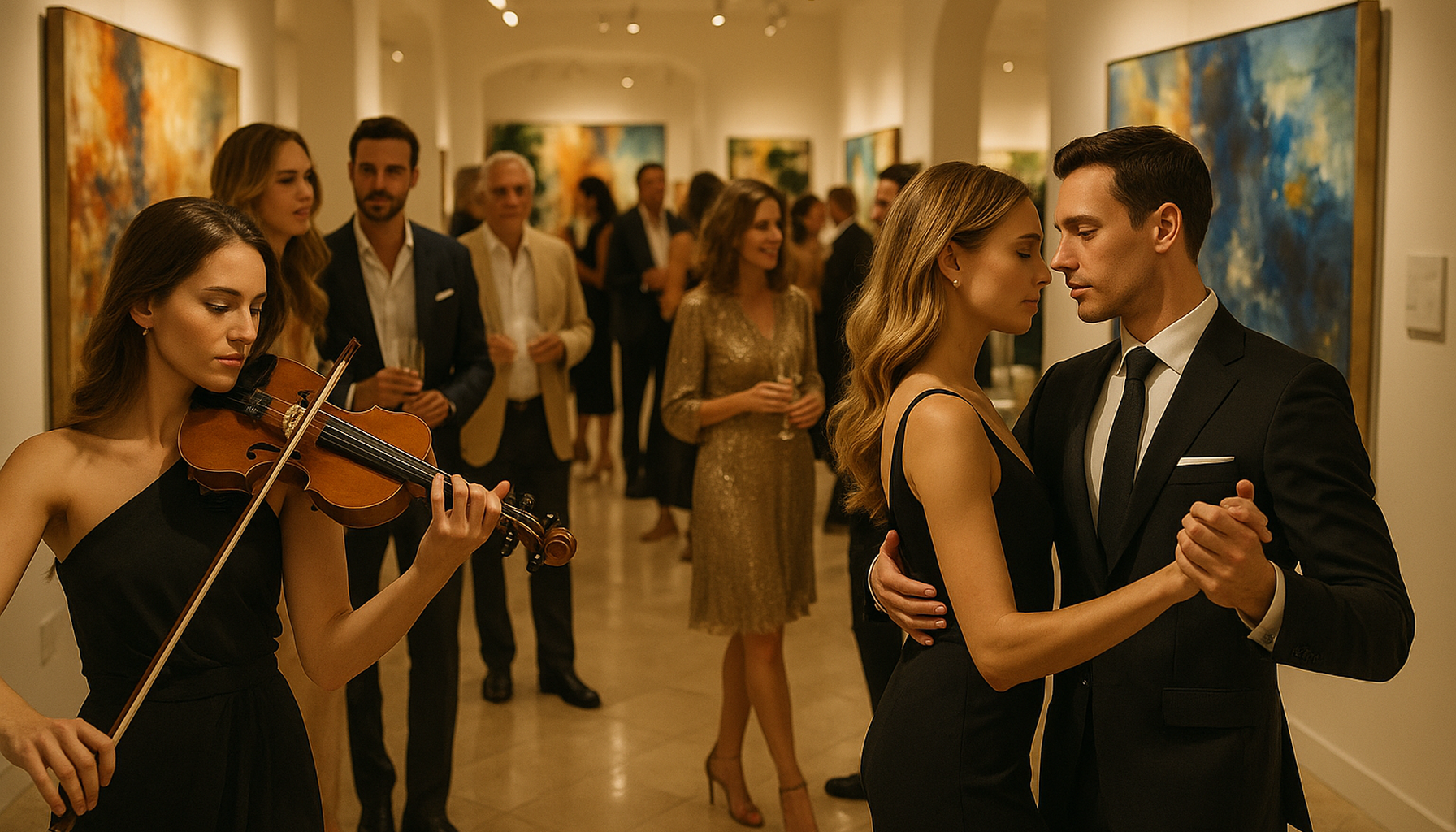
An art gallery opening is one of those events that can look beautiful on paper and still feel a little flat in person. The walls are curated. The lighting is right. The wine is chilled. The guest list is strong. But once people arrive, hosts often realize the room needs more than décor. It needs movement, rhythm, and a sense that something meaningful is unfolding.
That is why more hosts in Palm Beach, West Palm Beach, Boca Raton, Delray Beach, Jupiter, and across South Florida are using live violin and subtle dance moments to shape the energy of a gallery event. Done well, this does not turn the evening into a loud party or distract from the art. It does the opposite. It gives the room a pulse, helps guests relax into conversation, and makes the opening feel like a real occasion instead of a quiet walkthrough.
Gallery openings need atmosphere, not just attendance
People do not remember an opening because there were enough bodies in the room. They remember it because the mood felt intentional. The best gallery events have a soft sense of progression: arrival, curiosity, conversation, discovery, and a few moments that gently gather attention. Without that rhythm, even a strong show can feel socially hesitant. Guests hover near the entrance, cluster around the bar, or move through the space too quickly.
Live music immediately changes that. A violin sets a refined tone without overpowering the room, which matters in spaces where people still need to talk, listen, and actually look at the work. It creates presence without creating noise. That balance is especially important in Palm Beach cultural settings, where guests expect something polished but never pushy. A carefully designed live violin experience can make the opening feel elevated from the first step inside.
Why violin works so well in gallery spaces
Gallery acoustics reward instruments that can fill a room gracefully. Violin carries beautifully through open white-wall spaces, high ceilings, and modern interiors without the bluntness a speaker-heavy setup can create. It can welcome guests during the first half hour, support a champagne reception, and still leave enough breathing room for conversation between collectors, friends, designers, and curators.
It also feels visually aligned with the setting. A gallery opening is about refinement, detail, and emotional response. Violin complements that language. The repertoire can be tailored too: classical crossover, romantic instrumentals, elegant contemporary covers, and lighter recognizable melodies all work well when the goal is to make guests feel engaged rather than interrupted.
A subtle dance element changes guest behavior in the best way
The dance component does not need to be large to matter. In fact, the strongest approach is usually restraint. A short professional demonstration, a few carefully timed partner moments, or a soft social-dance invitation later in the evening can transform how people use the room. Guests become more mobile. They circulate instead of parking in one corner. Conversations loosen. Phones come out for the right reasons. The opening starts to feel alive.
This is especially effective when the dance moment is woven into a broader performance experience rather than treated like a random interruption. One elegant set after the initial guest arrival can create a shared focal point without stealing attention from the artwork. It tells guests the evening has shape. It also gives photographers and venue teams much stronger visual moments to work with.
How to keep the art at the center
A common concern is whether entertainment will compete with the exhibition. It does not have to. The trick is pacing. The opening should still belong to the art, and the music and dance should act like architecture around it. That means avoiding constant performance, keeping the volume conversational, and choosing one or two defined spotlight windows instead of trying to animate every second of the night.
In practical terms, that often looks like this: elegant violin during arrival, short remarks or a welcome, one featured performance moment, then a return to a more fluid social pace. If the event runs longer, a second, brief set can come later. This lets guests experience the work, mingle naturally, and still feel that the event had curation beyond catering and lighting.
Layout matters too. Keep a clear circulation path, avoid blocking key walls or sculptures, and give the performers a zone that reads as intentional but not stagey. You do not need a huge dance floor. For many openings, a small polished area or even an open pocket of floor is enough to create a sense of motion and elegance.
Why this works especially well in Palm Beach and Boca Raton
Palm Beach audiences respond to events that feel cultured, social, and visually refined. The same is true in nearby West Palm Beach, Boca Raton, Delray Beach, and Jupiter, where many openings draw a mix of collectors, seasonal residents, business owners, nonprofit supporters, and guests who attend plenty of beautiful events. They are not looking for gimmicks. They are looking for quality.
Live violin and sophisticated dance fit that expectation naturally. The combination feels luxurious without becoming stiff. It photographs beautifully. It works in contemporary spaces as well as more classic interiors. And because the performance can be scaled up or down, it adapts well to a boutique artist debut, a private collector reception, a showroom launch, or a larger public opening.
The planning details most hosts miss
If you want the event to feel seamless, a few details matter more than people expect. Think about where guests first hear the music. Make sure the highest-traffic artwork still has room to breathe. Consider heel-friendly flooring if any guest participation may happen. Watch direct air-conditioning placement around the instrument. Match wardrobe and performance tone to the gallery brand. A sleek contemporary opening may want a more editorial feel, while a warmer Palm Beach space may lean more romantic and social.
If the hosts themselves want to feel relaxed during any guest-facing dance moment, a few private lessons before the event can help tremendously. That is especially useful for collector dinners, donor receptions, or couple-hosted openings where the hosts may want to greet guests with confidence instead of worrying about how they move in the spotlight.
When the atmosphere is built correctly, guests stay longer, interact more naturally, and leave with a stronger emotional memory of both the art and the event around it. That is the real win. If you are planning a gallery opening in Palm Beach or anywhere in South Florida, call (561) 523-4133 or contact us here to create a violin and dance experience that feels elegant, curated, and genuinely alive.