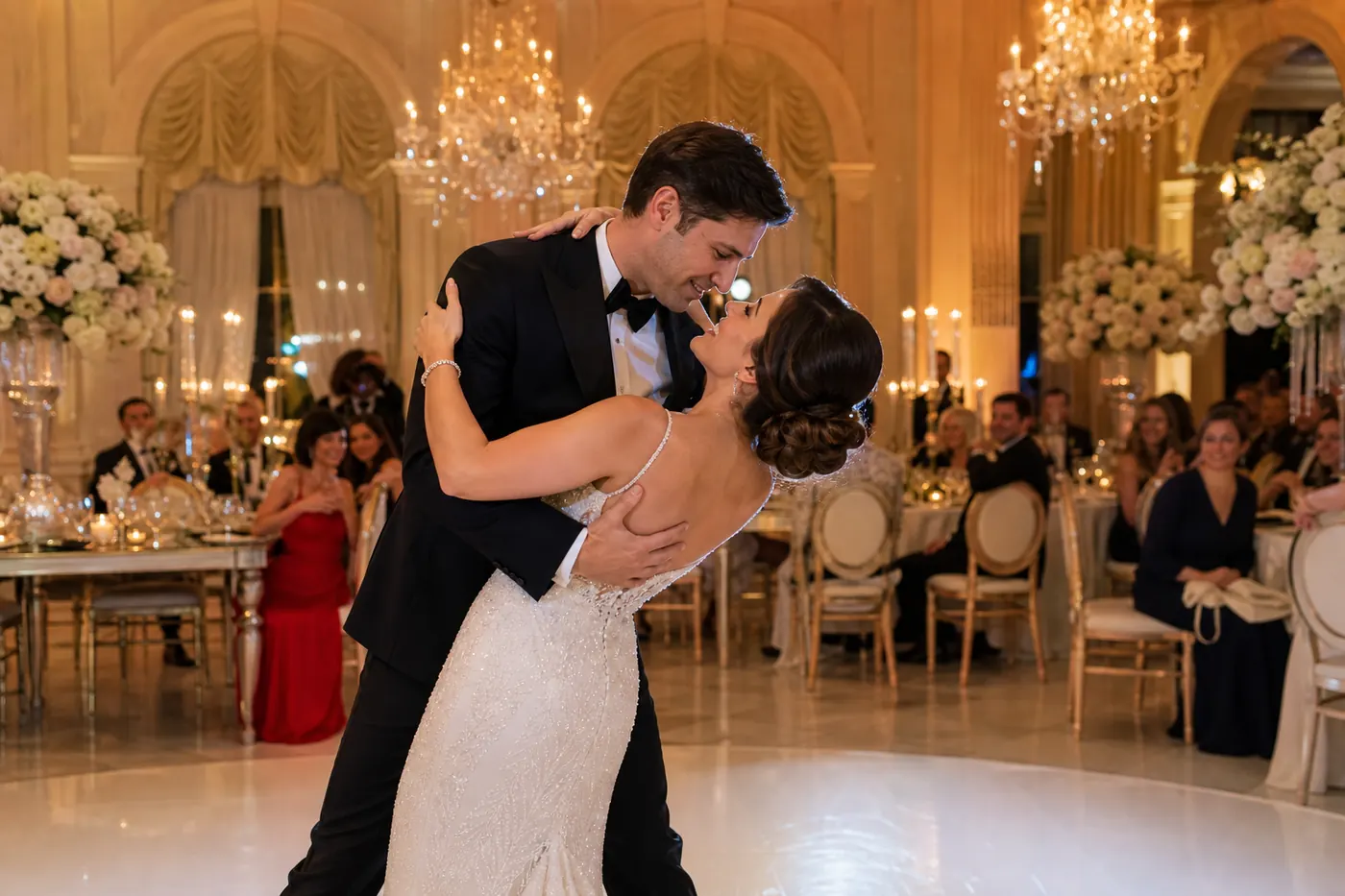
It’s one of the first questions engaged couples ask: how long does it actually take to learn a first dance? The honest answer depends on three things: where you’re starting from, how much choreography you want, and how much you practice between lessons. The good news is that a relaxed, confident first dance usually takes less time than couples fear.
The short answer: 5 to 10 lessons
Most couples take between 5 and 10 lessons to learn their first dance. A simpler dance sits toward the lower end of that range. Fuller choreography, with turns, dips or a dramatic ending, needs more lessons, because every new move has to become automatic before the big day.
Couple lessons run 45 minutes, so even ten lessons add up to a handful of focused hours, not a second job. Gala Ballroom’s wedding first dance packages show the range of what couples choose:
- Essential, 3 sessions: simple choreography, posture, frame, timing and confidence.
- Complete, 5 sessions: custom choreography, turns or dips, performance coaching, a practice video and song guidance.
- Premier, 8 sessions: fuller polish, an optional lift, backup preparation, a bridal-party mini-lesson and video documentation.
Package availability and current pricing are confirmed when you inquire.
What changes the number of lessons
Your starting point
Couples who have never danced together spend the first lesson on fundamentals: posture, a hold that feels natural rather than stiff, finding the beat and shifting weight from foot to foot. Couples with some experience can move to choreography sooner. Neither is a problem; it just shapes the plan. There’s more on how that first session runs in what to expect from a first dance lesson at home.
How much choreography you want
A first dance can be a comfortable sway with a turn or two, or a fully choreographed piece with dips and a dramatic ending. Simple structures need less repetition. Fuller choreography needs more, because on the day you’ll also have nerves, an audience and cameras to contend with. If you’re unsure which suits you, see choosing between a wedding choreographer and a first dance coach.
Your song
Many full-length songs run three to four minutes, which can feel long on a dance floor with everyone watching. Many couples shorten their song, often fading out after two or three minutes. A shorter edit means less choreography to learn and a stronger finish. Your DJ or band can usually prepare an edited version.
Practice between lessons
This is the biggest variable of all. Ten or fifteen minutes of practice a few times a week, with a practice video if you have one, can save you an extra lesson. Couples who practice between sessions arrive ready to build, not relearn.
A simple planning timeline
- Two to three months before: choose your song, decide how much choreography you want, and book your first lesson. That leaves room for 5 to 10 lessons without rushing.
- Six to eight weeks before: regular lessons, roughly weekly, with practice in between.
- Two to three weeks before: run the dance in the shoes you’ll wear, and practice in a long skirt or something similar if your dress is long or has a train.
- The final week: a last run-through to build confidence. It isn’t the time to add new moves.
Short on time? Tell us your date when you get in touch, and we’ll suggest a realistic plan for the weeks you have. A simpler structure is the safest choice when the date is close.
Things couples often forget
- The dress: a long gown or train changes how you turn and travel. Practice in a stand-in skirt so there are no surprises.
- The floor: venue floors are often larger, or smaller, than your living room. Know roughly where you’ll start and finish.
- The entrance and the ending: the first few seconds and the finish are what people remember and what photographers capture. They deserve as much rehearsal as the middle.
- Other family dances: if there’s a father-daughter dance or a mother-son dance, plan it at the same time.
Learning at home
Gala Ballroom teaches wedding couples privately across Palm Beach County, at home or in another private space nearby, depending on location and availability. There’s no audience and no studio schedule to fit around, and you learn in the space where you’ll practice afterward. Share your wedding date, song and how much polish you’d like, and we’ll suggest a plan that fits.